
Why you feel frazzled around children (and what your nervous system has to do with it)
If you feel overwhelmed by children's noise, your nervous system isn't broken - it's doing exactly what it evolved to do. From baby cries to playground chaos, children's sounds are designed to capture our attention. Explore the neuroscience behind sensory overload, why modern life amplifies it, and how intentional sound can help us find moments of calm.
If you're a parent or work around chilren and feeling overwhelmed by noise, interruptions, and constant demands on your attention, there's some good news:
Your nervous system isn't broken.
It's doing exactly what it was designed to do.
🎥 Prefer to watch?
I made a short video explaining this here.
Why children's sounds are so hard to ignore
Humans are wired to respond to children.
Long before we had phones, emails and WhatsApp groups, our survival depended on noticing a baby cry, a shout of distress, or a sudden change in tone.
Children's voices often sit in a higher frequency range than adult voices, and our auditory systems are particularly sensitive to these sounds. They're difficult to tune out because, evolutionarily speaking, they weren't meant to be ignored.
Your brain constantly scans your environment for information that might require action. A child's cry, squeal, shout, or call for attention immediately jumps to the front of the queue.
Even when the sounds are happy.
Even when nobody is in danger.
Even when you're trying to drink a cup of tea.
Why modern life makes it harder
The challenge isn't just the children.
It's the children, plus everything else.
Notifications.
Emails.
Social media.
The mental load of remembering appointments, meals, birthdays, school forms, and the hundreds of invisible tasks that keep life moving.
Many parents spend large parts of the day in a state of low-level vigilance.
Listening.
Monitoring.
Responding.
Eventually, the nervous system becomes fatigued.
This is why many parents describe feeling burned out, overwhelmed by noise, or unable to tolerate one more person asking for something.
It's not weakness.
It's literally sensory overload.
What about children with additional needs?
I've recently been working alongside an SEN school and it's deepened my appreciation for the sensory demands placed on both children and caregivers.
Many autistic children and children with complex medical or learning needs experience the world differently from a sensory perspective.
Some may be highly sensitive to sound, while others actively seek sensory input through movement, vibration, pressure, or rhythm.
Caregivers and support staff are often navigating not only their own nervous systems, but the sensory needs of another person too.
That requires extraordinary patience, presence, and adaptability.
In these environments, sound isn't just entertainment or background noise.
It's information.
It's regulation.
It's communication.
Why rest isn't just "doing nothing"
When people think about relaxation, they often imagine putting on music, watching television, or scrolling on their phone.
But these activities still ask the brain to process information.
Lyrics need decoding.
Stories require attention.
Algorithms are designed to keep us engaged.
Even relaxing music contains changes, surprises, and emotional cues for the brain to follow.
True nervous system recovery often requires something different.
Predictability.
Repetition.
Simplicity.
A chance to stop scanning.
How sound can help
This is one of the reasons I work with sound in the way that I do.
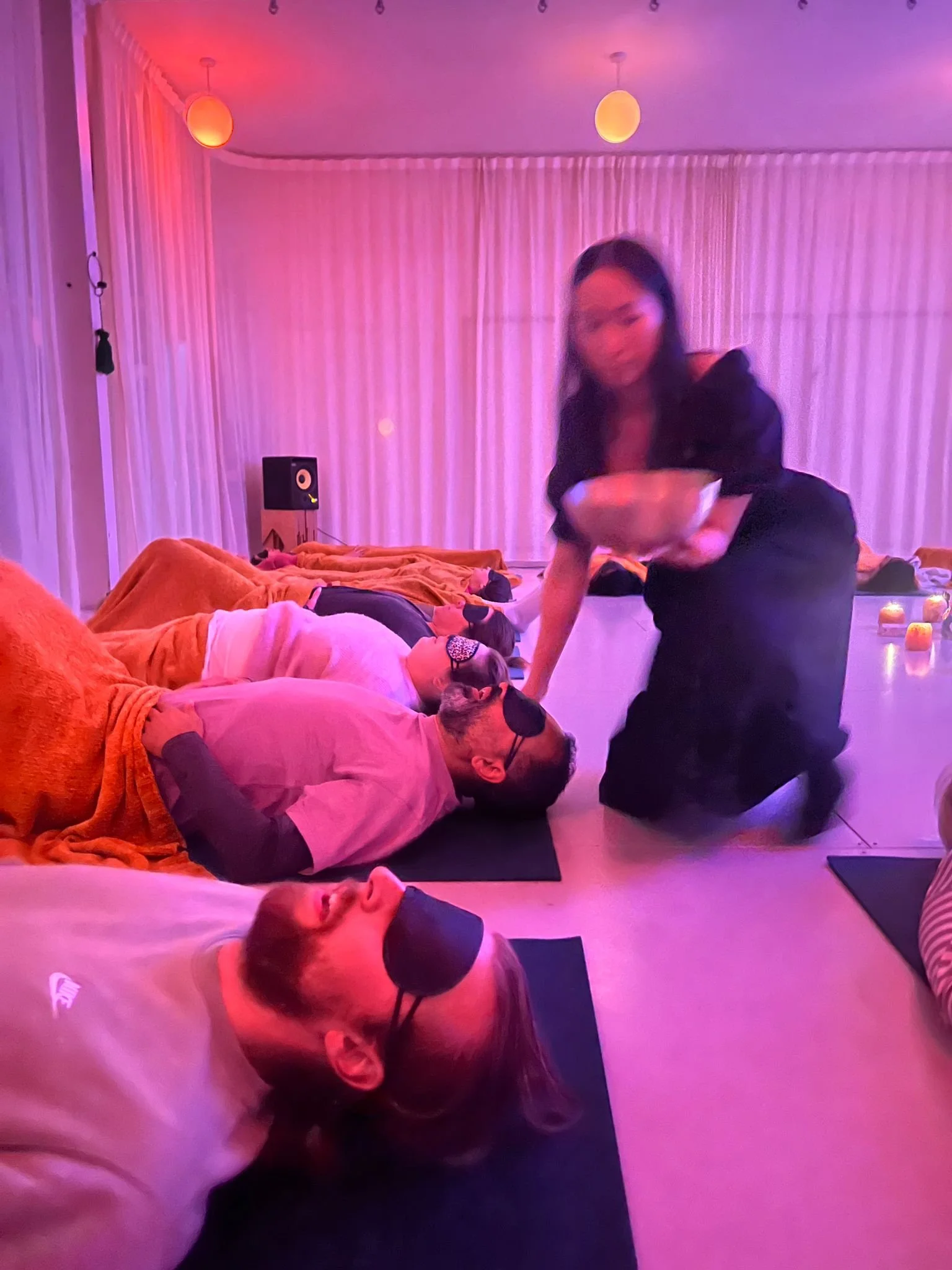
My sensory sound sessions use repeated patterns, sustained tones, vibration, scent, guided attention, and traditional instruments such as gongs and singing bowls.
Rather than constantly asking the brain to follow a narrative, these sounds create an environment that encourages the nervous system to settle.
The goal isn't to switch off.
It's to create enough safety that the body no longer feels the need to stay on high alert.
For many people, especially parents, carers, teachers, healthcare workers and support staff, that experience can be surprisingly rare.
A final thought
Whether you're raising children, supporting young people with additional needs, working in education, or simply trying to navigate modern life, feeling overstimulated doesn't mean you're failing.
It means your nervous system has been working hard.
The real question isn't how to become tougher.
It's how often you give yourself permission to rest.
And not just physically.
Sensorily too.